
Your needs, this model
Does it fit your priorities?
Which CJ90VST2 stroke and steel-capacity figures should I use?
Do not collapse the manufacturer records into one number. The exact U.S. page lists a 3/4-inch stroke and steel capacity of 5/16 inch. The linked CJ90VST2 manual lists a 1-1/32-inch stroke and mild steel at 25/64 inch (10 mm); the model-specific 2023 tool card also lists a 1-1/32-inch stroke and steel at 3/8 inch. Wood capacity is listed as 3-1/2 inches in all three. The disagreement is unresolved here; use the exact manual and nameplate for the work in front of you, and do not treat listed capacity as a cut-quality test.
Explore this need in the finder →Does the CJ90VST2 take T-shank blades, and what does its product page list in the box?
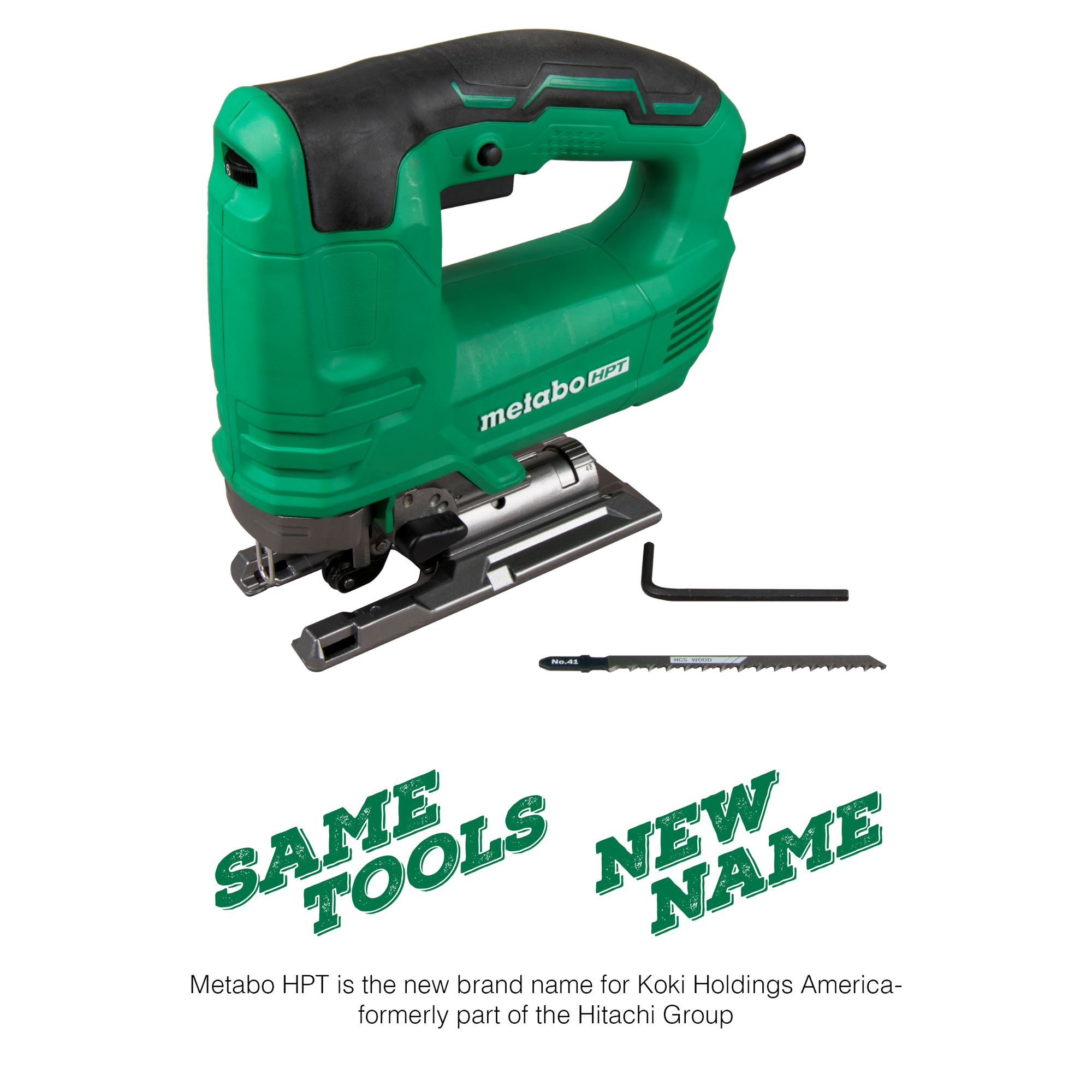
The CJ90VST2 tool card explicitly says the clamp accepts T-shank blades only. Its exact product-page Includes section names a No. 41 jigsaw blade and a hexagonal bar wrench, but does not state the blade count or list a case. The manual treats the splinter guard, sub base, dust-collection adapter and cleaner arrangement as separate; the stainless-steel No. 97 blade is also sold separately. Check the exact suffix and the seller's written package list.
Explore this need in the finder →Can the CJ90VST2 keep its bevel option when an external vacuum is attached?
No, not in the documented dust-collector setup. The manual says angular cutting cannot be done with the dust collector installed. The exact page and manual describe a shoe that can bevel up to 45 degrees both ways; the manual's collection route uses a separate dust-collection adapter, another adapter and a cleaner. Use the built-in blower arrangement for beveling, and remember the blower is not dust capture.
Explore this need in the finder →The Metabo HPT CJ90VST2 is a corded, D-handle jigsaw with a T-shank-only clamp, variable speed, selectable orbital action, a cutline blower and an adjustable shoe. Its own product page and linked manual disagree on two headline specifications, so this assessment keeps the conflicting figures visible instead of forcing them into a single number.
Keep CJ90VST2 distinct from the earlier CJ90VST
The exact U.S. product page names the retail model CJ90VST2 and links a CJ90VST2 owner manual and parts list. The captured Metabo HPT Type=Jig Saw page also includes CJ90VST2 in its current filtered results. The separately observed CJ90VST has its own manufacturer tool card and remains a different model record; the similar names alone do not prove that its package, version or specifications can be substituted here.
This is a mains-powered saw rather than a battery-platform purchase. The model-specific manual specifies single-phase 120 V AC at 60 Hz and 5.5 A. It describes a variable speed dial from 850 to 3,000 strokes per minute, while the current page also identifies the D-shaped handle, soft grip and lock-on button. Those are documented controls and layout, not evidence that the saw feels comfortable in a particular hand or cuts faster than another model.
The product page and manual do not agree on stroke or steel capacity
Start with what the three exact-model sources agree on: wood capacity is listed as 3-1/2 inches, speed spans 850–3,000 SPM, current is 5.5 A and the tool weighs 4.9 pounds. But the exact product page lists a 3/4-inch stroke and 5/16-inch steel capacity. Its linked manual lists a 1-1/32-inch stroke and 25/64-inch (10 mm) mild-steel capacity. The model-specific September 2023 tool card likewise gives a 1-1/32-inch stroke, but lists steel at 3/8 inch.
These are not values that should be averaged or treated as one settled rating. The conflict is between the manufacturer’s own product page, model manual and tool card; this review cannot resolve it from those records. For a material near a listed limit, check the exact tool nameplate and current manual before buying or operating it. Capacity listings do not promise cut quality, straightness, speed or suitability for every stock thickness.
The manual also places a specific limit on low speed: at dial settings 1 or 2, it cautions against wood over 5/16 inch (8 mm) and metal over 1/32 inch (1 mm). Those are low-speed cautions, not a replacement for the separate maximum-capacity statements. For stainless plate, the manual describes a narrower special procedure: use the separate No. 97 blade, set orbital position 0, use its dial guidance between scales 2 and 3, and apply cutting fluid. It gives a blade-specific 1/16–5/32-inch (1.5–2.5 mm) range; that instruction is not a general steel limit.
Orbit, blade fit and material choices
The manual defines position 0 as straight up-and-down motion and positions I through III as orbital movement; the product page describes three orbital settings plus the straight cut. It recommends less orbit for hard materials and accuracy, and more for softer lumber and plastic. It names phenol resin and vinyl chloride among plastic applications, but publishes no plastic cutting depth. Its wood guidance is general lumber, not an independent hardwood-versus-softwood rating, so neither species-specific capacity should be inferred.
For metals, the manual names mild steel, aluminum and copper plates and provides a separate procedure for stainless. It says to set speed between dial scales 3 and 4 for metal and to use suitable cutting fluid; its stainless procedure has its own more specific settings. The included No. 41 blade is not the No. 97 stainless blade. The exact-model tool card states the clamp accepts T-shank blades only, so U-shank blades are not a documented option. Choose the blade for the actual stock and follow the manual, rather than assuming the supplied wood blade covers all materials.
A blower and a vacuum are not the same dust setup
The built-in blower directs debris away from the cut path; it is not a vacuum and does not capture dust. The manual describes an external cleaner connection through a dust-collection adapter and another adapter, with the collection parts and cleaner sold separately. The model parts list names the 370492 dust-collector component, but that service-parts list should not be mistaken for the box contents. Confirm the exact adapter and vacuum connection before planning around extraction.
The shoe can be adjusted up to 45 degrees to either side. That bevel feature does not coexist with the external dust collector: the manual specifically says angular cutting cannot be done while the dust collector is installed. A bevel task therefore calls for the built-in blower arrangement rather than the external collection setup. The manual describes 15-degree angle marks; no claim is made that a specific bevel will deliver a particular edge or accuracy.
What the model page lists—and what remains uncertain
The exact CJ90VST2 page lists a No. 41 jigsaw blade and a hexagonal bar wrench. The manual identifies the No. 41 as the included blade, while it describes the splinter guard and sub base as sold separately. It also describes the No. 97 blade and dust-collection parts as separate. Neither the exact page nor the photograph gives a blade count or lists a carrying case, so verify the seller’s written package for the CJ90VST2 suffix instead of reading more into a product image.
The manufacturer’s gallery image linked from the exact page shows the saw, shoe, blade and wrench. That confirms the depicted body and some listed items; it does not establish what any retailer currently has in stock, a seller’s package, a price, or a performance test. A bounded exact-name CPSC lookup returned an empty result for CJ90VST2 on the check date; that is not a promise that no differently indexed or later notice exists.
Who should compare this corded model?
The CJ90VST2 is worth comparing if your work area has a suitable 120 V outlet, you want a top-handle grip and T-shank blades, and the integrated blower or bevel option matters. Its manuals support a wood/plastic orbital arrangement and a separate straight-action metal procedure; optional vacuum collection is possible only with added adapters and changes the available bevel setup. If dust capture is essential, include those parts in the decision and do not count the blower as extraction.
The largest caution is the specification disagreement: stroke and steel capacity differ across the exact product page, manual and card. Check the current documentation for the exact tool and material. Also confirm the written package, suitable blades, accessory compatibility and return terms. This is a research-based assessment of manufacturer evidence and an exact-page image—not a hands-on review, measured cut test, ownership report or guarantee of current availability.
Key specifications
Key details at a glance
| Power source | Corded mains power |
|---|---|
| Grip format | Top handle |
| Motor type | Single-phase series commutator motor (manual terminology) |
| Brushless motor | No |
| Blade interface | T shank |
| Cut-action settings | 0 / 1 / 2 / 3 |
| Maximum documented speed | 3000 SPM |
| Maximum documented bevel | 45° |
| Battery included | No |
| Charger included | No |
| Blade listed in package | No |
| Integrated cutline blower | Yes |
| Optional vacuum-extraction route documented | Yes |
| Rated motor current | 5.5 A |
Use the exact model’s instructions for operating limits, supplied equipment and version differences.
Sources for this review
Sources for this assessment
- Metabo HPT current U.S. Saws page filtered to Type=Jig Saw
- Metabo HPT exact CJ90VST2 U.S. product page
- Metabo HPT CJ 90VST2 U.S./Canada instruction manual
- Metabo HPT CJ90VST2 model-specific tool card (September 2023)
- Metabo HPT CJ90VST2 electric jig saw parts list
- Metabo HPT CJ90VST2 exact product-page gallery image
- CPSC exact-name recall query: CJ90VST2

Make the next check about your project
Use the finder to combine material, blade interface, grip and operating setup. It matches documented capabilities, not guaranteed results.