
Your needs, this model
Does it fit your priorities?
Does the PCL525B include a battery and charger?
No. RYOBI's exact PCL525B page says battery and charger are sold separately. Its separate PCL525K1 kit page lists one PBP002 18V ONE+ 1.5Ah battery and one PCG002 charger with the same PCL525 saw; verify the suffix and actual carton before buying.
Explore this need in the finder →Which blade interface does the PCL525 use?
The model-specific PCL525 manual says the saw is designed for T-shank blades and warns that a non-T-shank blade may come loose. The tool-only package page also lists a T-shank wood-cutting blade. Check blade length and tooth pattern for the stock; U-shank fit is not documented.
Explore this need in the finder →What orbital setting does the PCL525 manual suggest for hardwood?
The manual assigns setting 2, its medium-orbit position, to plywood, decking, and hardwood. It recommends setting 0/no orbit for thin sheet metal, setting 1/minimum orbit for plastics/PVC or scrolling wood, and setting 3/maximum orbit for general lumber and softwood. Those are source instructions rather than test results.
Explore this need in the finder →This is a document-based assessment of the current US RYOBI PCL525B tool-only package and its PCL525 saw body, not a hands-on test. I used the exact product listing and the PCL525 operator's manual to separate the model's stated features from results that would require cutting sample material.
What the PCL525B actually is
The PCL525B is a cordless 18V ONE+ jigsaw in the familiar top-handle format. Its model-specific manual specifies a one-inch stroke, a no-load speed range of 0 to 3,000 strokes per minute, and four orbital positions. The exact US tool page identifies it as the PCL525 saw body and lists the battery and charger separately.
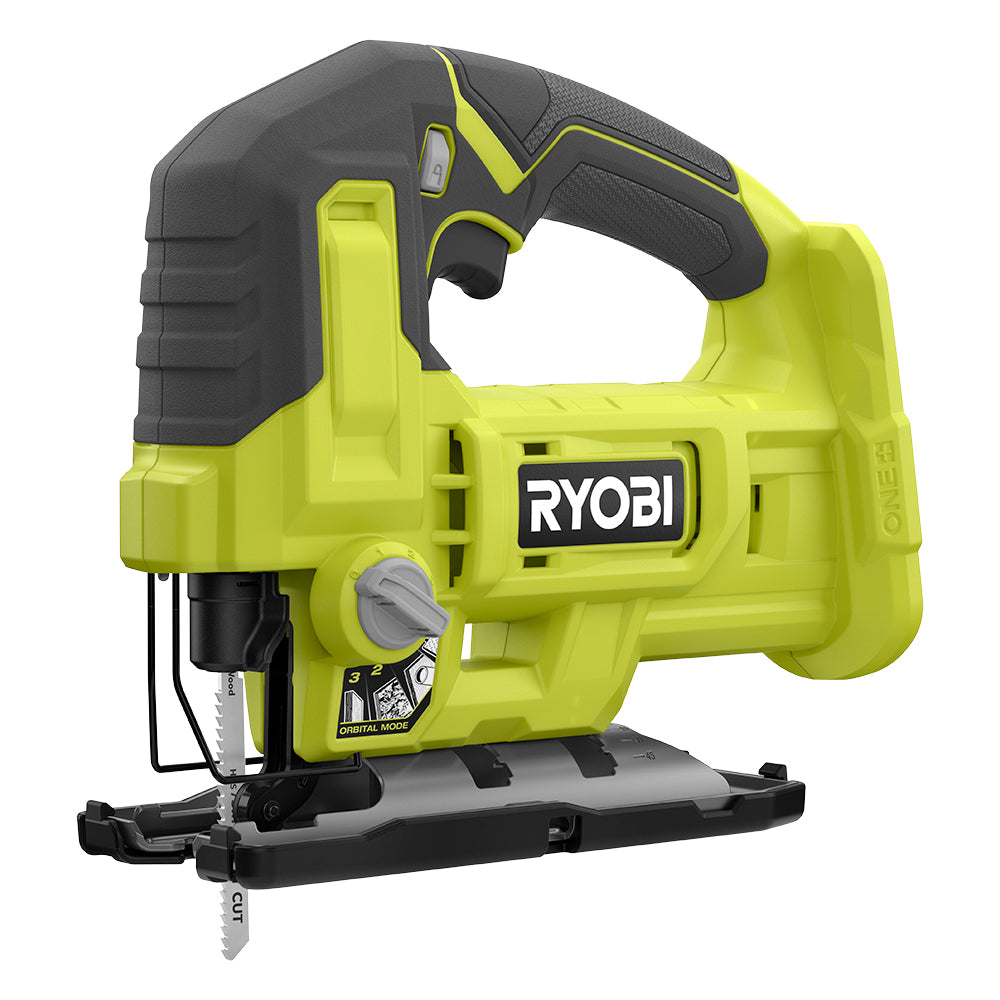
RYOBI's product copy promotes reduced vibration, but there is no independent vibration measurement here. A hand position, workpiece, blade, and cut direction all affect the experience. The official image below shows the saw body without the kit battery or charger, so it should not be mistaken for a complete boxed setup.
Blade fit is the first compatibility check
The PCL525 manual is unusually direct about the clamp: it is designed for T-shank blades, and non-T-shank blades may come loose. That warning should take precedence over assumptions based on a blade's appearance. The PCL525B listing names a T-shank wood-cutting blade in the package; for another task, choose a T-shank blade whose tooth pattern and material rating suit the stock.
The clamp is tool-free, but the manual says to remove the battery before installing or removing a blade and to let a hot blade cool before removal. It also asks the operator to confirm the blade sits correctly against the support roller. Those instructions matter more than a quick-change label: the battery is the power source, and the saw remains capable of starting while a pack is installed.
Use the material chart, not one setting for everything
The manual pairs its action positions with particular materials. At 0, the blade has no orbital motion; the chart assigns that mode to countertop or laminate board and thin sheet metal. Position 1 is the minimum orbit, recommended for plastics and PVC and for scrolling or curving cuts in wood. Position 2 is medium orbit for plywood, decking, and hardwood. Position 3 is maximum orbit for general lumber and softwood.
These are operating recommendations, not a promise of a smooth edge or a cutting-depth rating. RYOBI's manual says lower orbital settings tend toward a slower, smoother cut, while higher settings are faster and rougher. For a curve or visible edge, pick a blade for the material and favor control over speed; for general lumber, the manual's more aggressive setting may suit the task, but the blade and feed still govern the result.
Wood is the broadest documented application: the manual names lumber, plywood, paneling, composition board, and hardboard. It also lists plastic and laminates. Its metal section calls for no orbit and an appropriate metal-cutting blade. It advises reducing speed if a blade heats, clamping stock near the cut, and using lubricant where appropriate. Thin sheet is the explicit application in the manual's overview. The sources reviewed here do not establish ceramic or cast-iron use, a maximum stock thickness, or the saw's maximum cut depth.
Beveling works, but it is a deliberate adjustment
The manual documents bevel cuts from 0 to 45 degrees to either side, with positive stops at 15-degree increments. The adjustment involves removing the battery, loosening two base-pivot screws, moving the base, aligning the pointer, and tightening the screws again. A hex wrench is listed in the box. The manual recommends using a protractor for accurate angles, so the detents are setup references rather than a substitute for checking a critical cut.
I found no model-specific source in the checked product page or manual that documents a cutline blower or an external-vacuum adapter for this model. Treat dust capture as unconfirmed rather than assuming that a generic hose will fit. The exact product copy does identify an onboard LED worklight and a non-marring shoe, but those features do not turn the saw into a dust-control system.
Choose PCL525B or PCL525K1 by the box
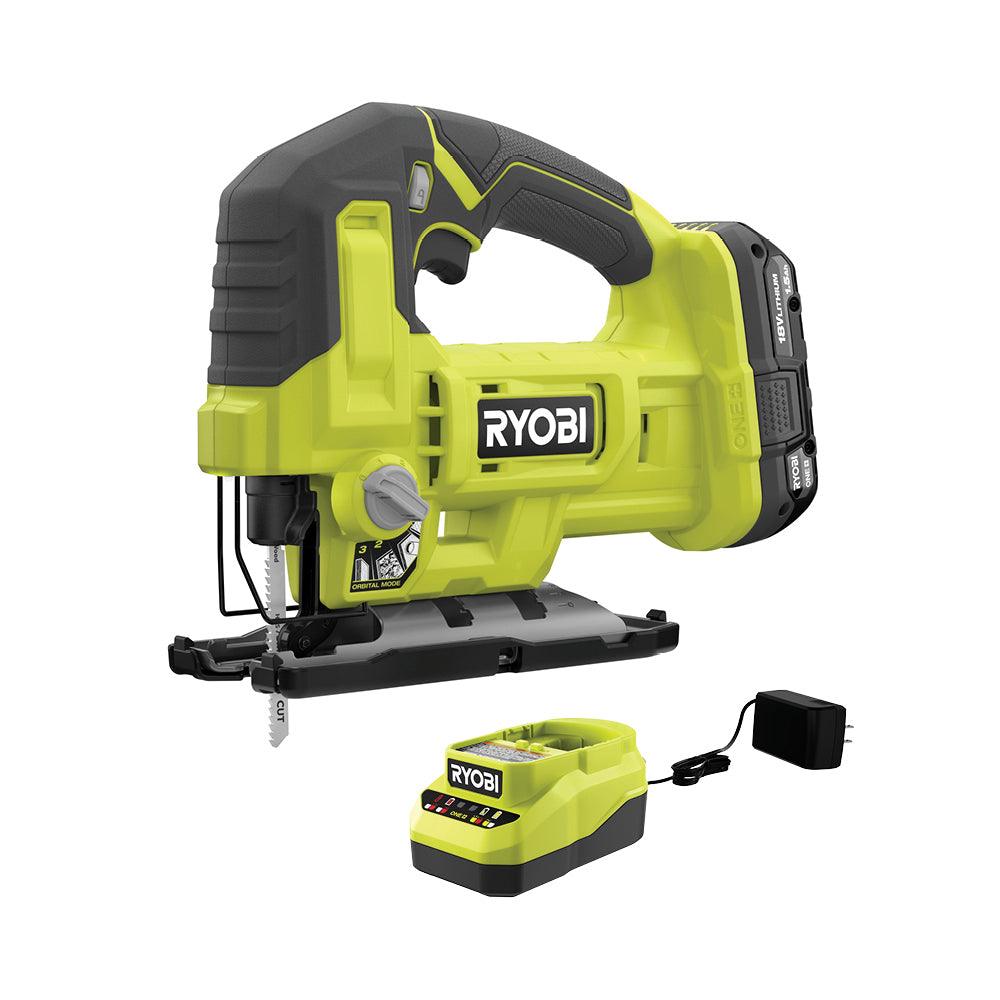
The PCL525B page lists the saw, non-marring shoe, T-shank wood blade, hex wrench, and operator's manual; its product copy says the battery and charger are sold separately. The separate PCL525K1 page identifies the same PCL525 saw body with a T-shank blade and hex wrench, plus a PBP002 18V ONE+ 1.5Ah battery and a PCG002 charger. Its page copy also names the shoe and manual. The image below is from the exact kit page and shows the saw with a battery and charger; it does not picture every small item in the written list. Check the suffix on the seller's listing and carton rather than assuming the package contains whichever accessories appear in a photo.
Four larger RYOBI kits include this same PCL525 saw
RYOBI's exact U.S. combo pages close an important identity gap: each written item list names a PCL525 jigsaw. I therefore treat the saw in PCL1306KN, PCL1800K3N, PCL2001K3N, and PCL2200K3N as the same model assessed above, not as four additional mechanisms guessed from similar green-and-black housings. The packages still differ enough that a buyer should check the suffix and the box rather than carry one kit's contents into another.
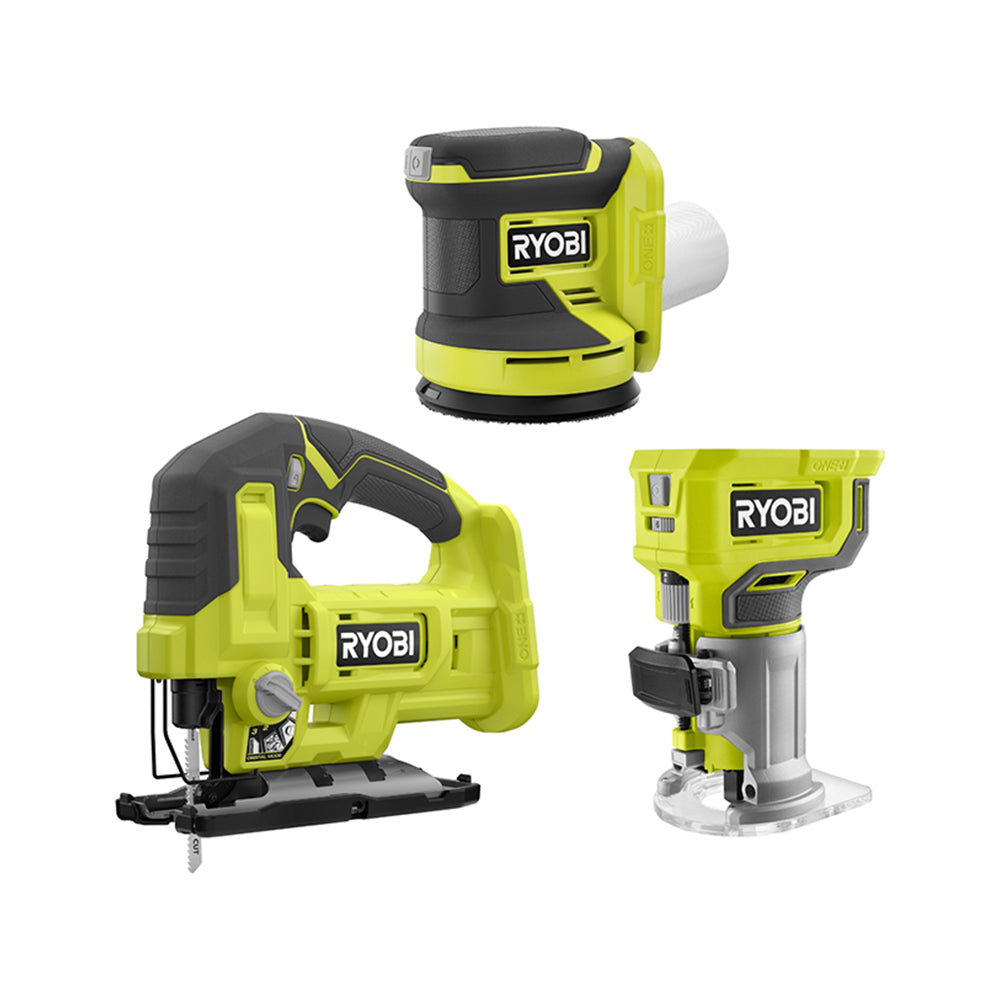
The PCL1306KN three-tool package pairs the PCL525 with a PCL406 random-orbit sander and PCL424 compact router. Its item data also lists a jigsaw blade, hex key, sandpaper assortment, dust chute, collet wrench, and operator's manuals. The checked list does not name a battery or charger, so I cannot tell from that page whether either is supplied. Confirm the live offer and carton if you need power equipment.
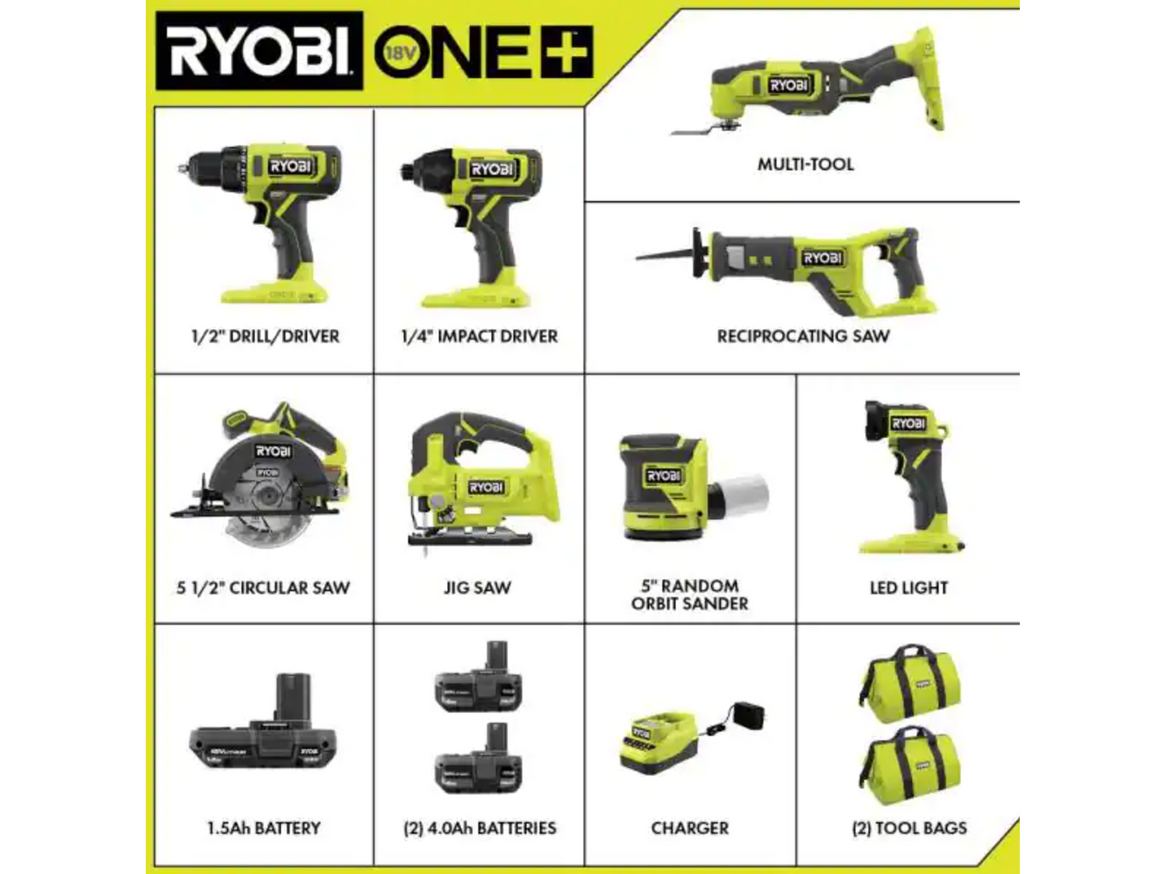
The PCL1800K3N eight-tool kit's page lists the PCL525 saw, its T-shank wood blade and hex wrench, two 4.0Ah ONE+ batteries, one 1.5Ah PBP002 battery, a PCG002 charger, and two tool bags. The exact page does not name the two 4.0Ah packs. PCL2001K3N (ten tools) and PCL2200K3N (twelve) pages list the same battery capacities, named PBP002 pack and PCG002 charger, and two bags with the PCL525; each has a different broader tool assortment. Battery capacity describes the listed packs, not the jigsaw's runtime.
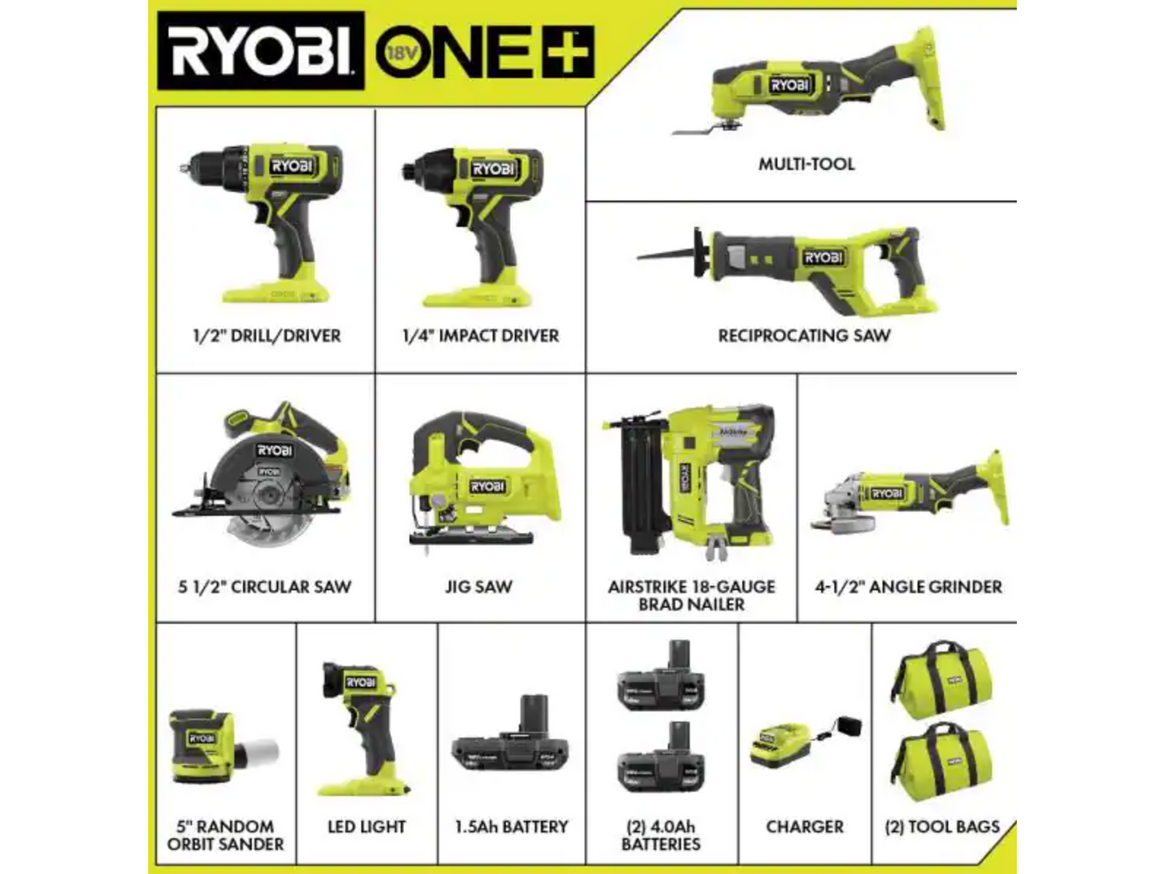
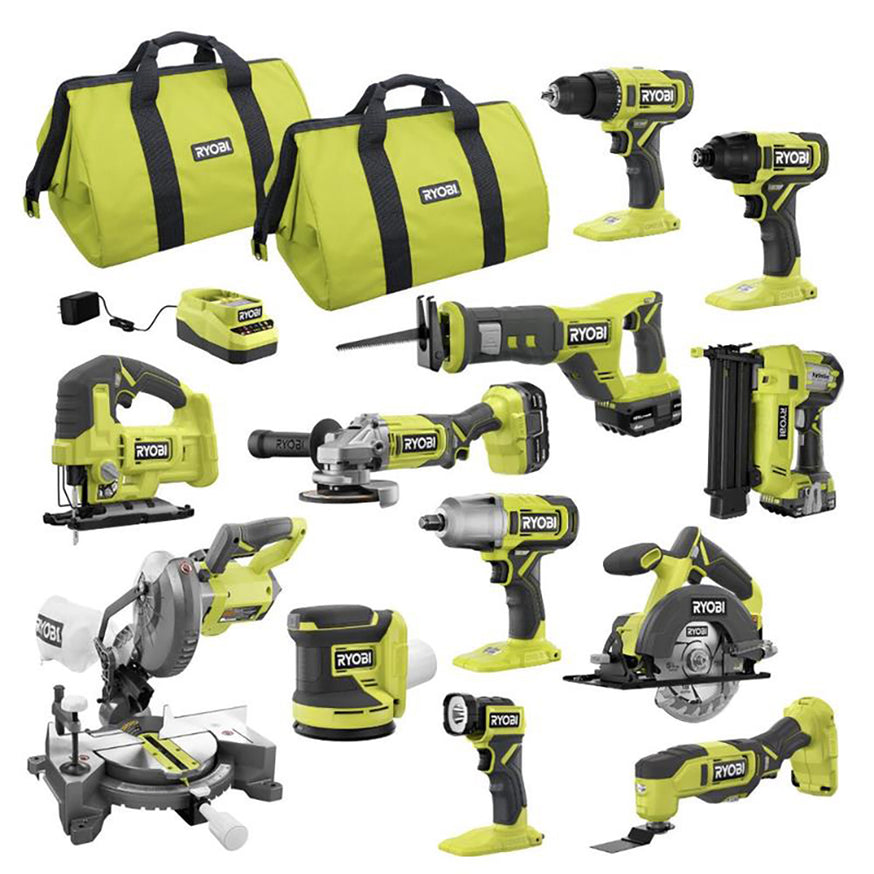
The combo pages do not document a different PCL525 cutting mechanism or publish a new maximum stock thickness. Use the PCL525 manual for blade seating, material selection, orbital settings, and bevel adjustment regardless of which of these boxes supplies the saw. A larger collection of tools or batteries should not be read as evidence of a different saw capacity, cut quality, or runtime.
Where it fits in the RYOBI lineup
The PCL525B gives a ONE+ owner a simpler top-handle package with clear material-by-setting guidance. It is not the same saw as the brushless PBLJS01B, and neither is the compact barrel-grip PSBJS01B. Those models have their own manuals, controls, and dust arrangements; compare their exact reviews rather than transferring details across names that share the RYOBI battery family. If a vacuum connection or a specified motor type is essential, the PCL525 sources checked here do not establish either one.
For an existing ONE+ owner who wants a top-handle saw, is comfortable with T-shank-only blades, and does not need an undocumented dust connection or numeric cut-depth promise, the PCL525B is a plausible tool-only candidate. If a battery and charger are also needed, compare the exact PCL525K1 package. In either case, match the orbital setting and blade to the task, secure the workpiece, and follow the full manual's safety instructions. This assessment does not claim ownership, measured performance, runtime, cut quality, or testing.
Key specifications
Key details at a glance
| Power source | Cordless |
|---|---|
| Battery platform | RYOBI 18V ONE+ |
| Grip format | Top handle |
| Blade interface | T shank |
| Cut-action settings | 0 / 1 / 2 / 3 |
| Maximum documented speed | 3000 SPM |
| Maximum documented bevel | 45° |
| Battery included | No |
| Charger included | No |
| Blade listed in package | Yes |
| Stroke length | 1 in |
Use the exact model’s instructions for operating limits, supplied equipment and version differences.
Sources for this review
Sources for this assessment
- RYOBI US Jig Saws collection snapshot
- RYOBI exact US PCL525B product page
- RYOBI PCL525 operator's manual
- RYOBI exact US PCL525K1 kit page
- Bounded exact-name CPSC recall query: PCL525
- RYOBI exact U.S. PCL1306KN 18V ONE+ 3-tool combo page
- RYOBI exact U.S. PCL1800K3N 18V ONE+ 8-tool combo page
- RYOBI exact U.S. PCL2001K3N 18V ONE+ 10-tool combo page
- RYOBI exact U.S. PCL2200K3N 18V ONE+ 12-tool combo page
Make the next check about your project
Use the finder to combine material, blade interface, grip and operating setup. It matches documented capabilities, not guaranteed results.