
Your needs, this model
Does it fit your priorities?
What does the JS313101 kit include?
SKIL lists the 5A saw, one wood blade, one metal blade and one Allen key. The list does not name a case, battery, charger or blade shank.
Explore this need in the finder →Can JS313101 use orbital cutting on plastic?
The manual identifies setting 2 for faster plastic cuts; setting 0 has no orbital movement and is identified as the accurate-cut option.
Explore this need in the finder →Is JS313101 easier to bevel than the 6A model?
The 5A manual says to loosen the shoe with the included hex wrench and reset it at 0° or ±45°. The 6A JS314901 page describes a tool-free lever, so their adjustment workflows differ.
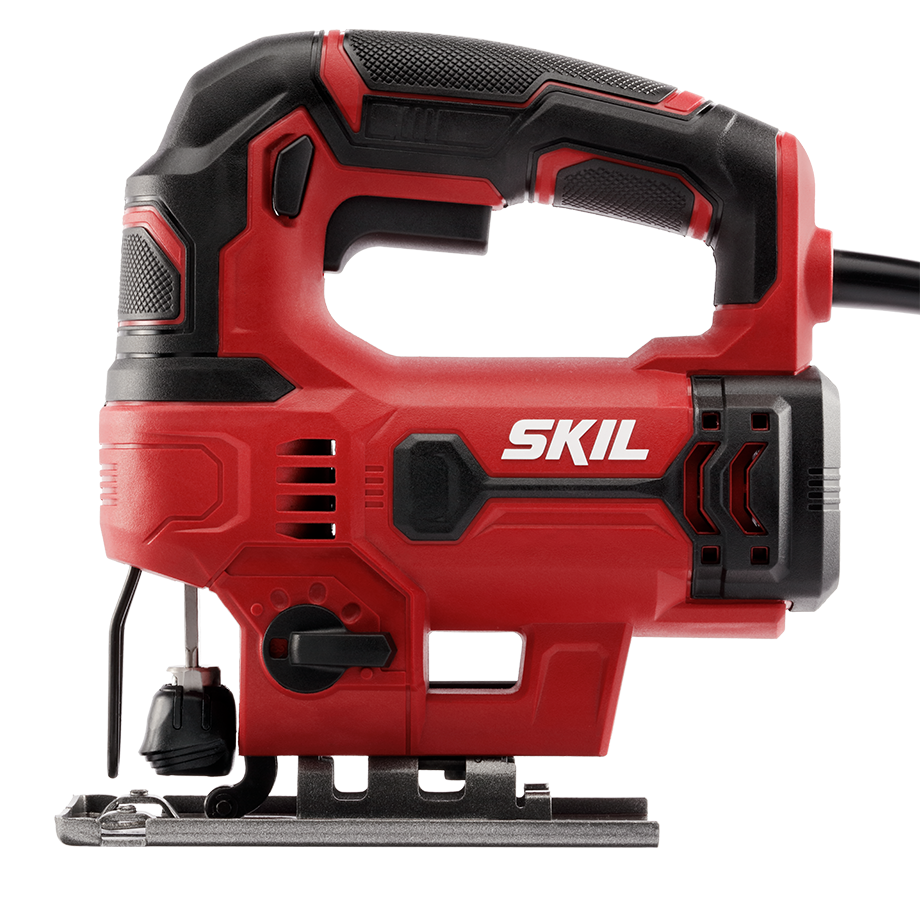
Explore this need in the finder →The SKIL JS313101 is a 5A corded jigsaw rated for 120V, 60Hz. SKIL’s product page lists a variable-speed trigger, brake, four-stage orbital function, dust-blowing switch, tool-free blade clamp and bevel shoe. The exact manual lists 0–3,000 SPM, an 18 mm stroke, 75 mm wood, 12 mm aluminum and 6 mm metal capacity. Those are manufacturer specifications, not measurements I made. The package list names a 5A saw, one wood blade, one metal blade and an Allen key; it does not list a case, battery, charger or vacuum accessory.
How it differs from the SKIL 6A jigsaw
The closest reviewed corded comparison is SKIL’s JS314901. That 6A model has a longer 23 mm stroke and a higher published wood capacity of 85 mm; the JS313101 manual lists 18 mm and 75 mm. Both manuals describe T- and U-shank blade compatibility and four orbital positions, but the bevel workflow differs: JS313101 requires a hex wrench to set its shoe, while the JS314901 page describes a tool-free adjustment lever. These are documented differences in capacity and setup, not evidence that one model cuts straighter or faster in a real workpiece.
Use the setting that matches the material
The JS313101 manual identifies position 0 as accurate cutting without orbit, position 1 for metal, position 2 for plastic and position 3 for hard wood. It calls the higher settings faster and says to make a test cut in scrap. It also recommends zero orbit when splinter-sensitive material is being cut. The material labels are not interchangeable: the product’s stated 6 mm metal capacity does not make every metal suitable for an orbital setting, and “hard wood” is not a species-by-species capacity table. The page’s generic “multitude of materials” phrase is not a substitute for those manual instructions.
SKIL’s speed dial and variable trigger offer a way to moderate blade speed, while the brake is intended to help the blade stop. Those controls are features, not a guarantee of finish. Blade tooth form, blade condition, speed, workpiece support and how the cut is guided all matter. The manual says to clamp the stock, keep the foot flat against the work, avoid forcing the tool and cut slowly through curves so the blade does not wander.
Blade fit and package blades
The tool accepts most common T- and U-shank blades according to its manual. The included blades are identified only as a wood blade and a metal blade; their shanks are not specified. If you already own blades, check the label and make sure the blade locks securely in the clamp and tracks against the roller. The kit’s Allen key is included for the shoe adjustment, not evidence that the supplied blades fit every jigsaw in your shop.
Dust and bevel setup
The blower directs dust away from the line; it does not collect dust. The reviewed product page and manual do not establish a vacuum nozzle, adapter or compatible hose. The manual shows shoe settings at 0 and 45 degrees left or right. To adjust, turn the saw over, loosen the shoe with the included hex key, tilt to the marked position, engage the lock pins and retighten the screw. This is a straightforward but deliberate process; it is less convenient than a tool-free lever if you change bevel angles often.
The cord is part of the operating arrangement. Plan an outlet and keep the cord clear of the blade path. Unplug the saw before changing blades or adjusting the shoe, clamp the material, and follow the manual’s eye-protection and dust precautions. No source establishes a vacuum or case in this package.
Who should consider JS313101?
Shortlist it if a corded 5A tool, 3/4-inch stroke, included Allen key and manual-documented orbital settings line up with your work. It is a lower-capacity published configuration than the reviewed JS314901, but the shank interface and basic material-setting pattern are similar. If you need tool-free bevel adjustment, a higher stated capacity, a confirmed dust-extraction connection or a particular included blade shank, compare another exact configuration and verify its box contents.
SKIL’s current collection lists JS313101, but a manufacturer listing is not retailer inventory. Check the exact SKU, seller package and current warranty and return terms. This is a source-based review, not a claim of ownership, hands-on use or comparative testing.
Key specifications
Key details at a glance
| Power source | Corded mains power |
|---|---|
| Grip format | Top handle |
| Blade interface | T- and u-shank |
| Cut-action settings | 0 / 1 / 2 / 3 |
| Maximum documented speed | 3000 SPM |
| Maximum documented bevel | 45° |
| Battery included | No |
| Charger included | No |
| Blade listed in package | Yes |
| Integrated cutline blower | Yes |
| Rated motor current | 5 A |
| Stroke length | 0.75 in |
| Maximum listed cutting capacity | 2.95 in |
| Hard case listed in package | No |
Use the exact model’s instructions for operating limits, supplied equipment and version differences.
Sources for this review
Sources for this assessment
Make the next check about your project
Use the finder to combine material, blade interface, grip and operating setup. It matches documented capabilities, not guaranteed results.